
Graphene is a wonder. This single layer of carbon atoms is stronger than steel and lighter than aluminum. It conducts electricity better than many other materials. And recent studies now show it can even kill germs. A new graphene-based material is being developed to harness that surprising superpower.
To turn on this germ killer, all you need is a little light. Exposing graphene to light starts a chemical reaction, says Giacomo Reina. That reaction produces molecules that can take down microbes such as bacteria, viruses or fungi.
A materials scientist, Reina works at EMPA, a research institute in St. Gallen, Switzerland. He was part of a team that unveiled the new material last year in EcoMat.
As a liquid, the substance could one day coat surfaces often rife with germs. Those might include doorknobs or handrails in hospitals. Right now, though, Reina’s team wants to use it in the human mouth. It’s a particularly germy place. Installing new dental implants can put someone at risk of infection. But coating the implant with this germ-fighting coating should greatly lower that risk.
Graphene’s greatness
In the 22 years since graphene was discovered, scientists have probed and explored it in many ways. They’ve even developed different types of useful graphene. It can add strength to concrete and tennis rackets. It can also boost the performance of electronic devices.
Nowadays, Reina says, graphene is more “a family” of materials. His team used a type called graphene oxide. It’s a layer of carbon atoms with oxygen-containing molecules attached. This formula mixes easily with water to form an acid.
To that liquid, the EMPA team added a dash of nitrogen. When scientists place some extra stuff in a material, they call it “doping.” So this new material is called nitrogen-doped graphene acid.
Making it requires high precision at a small scale. As such, graphene can be difficult to work with. Unplanned defects can make it unusable, Reina notes. The added nitrogen, he explains, helps keep it stable.
“When I saw this [material], I fell in love,” Reina says. “I wanted to try to see if it [would] work” as a germ-killer coating.

Graphene vs. germs
When light strikes it, the doped material responds in two ways. First, it warms — enough to kill certain microbes. But that light also triggers a chemical reaction between the doped graphene and oxygen in the air. This now creates a class of microbe-fighting molecules called radicals.
Turning the doped material into a liquid that could be used to coat surfaces took more than a year of trial and error. The scientists had to answer many questions about how the light was interacting with it, Reina says. “What happened with oxygen? What happened without oxygen? What kind of reaction are we generating? Does it work many times?”
To find out, the scientists compared the radicals produced by the doped material under different conditions. They also mixed the acid with a liquid plastic that could be easily spread on a surface.
The resulting material, Reina says, improves on past anti-germ coatings. For instance, unlike others, this one uses no metals (which may need ultraviolet radiation to activate their germ-killing action).
“It can become antimicrobial under just ambient light,” says Sara Imani. She calls that a “plus point” for the new material. Imani is a mechanical engineer in Canada at McMaster University in Hamilton, Ontario. She, too, works on new antimicrobial coatings (although not this one).
Taking down tough microbes
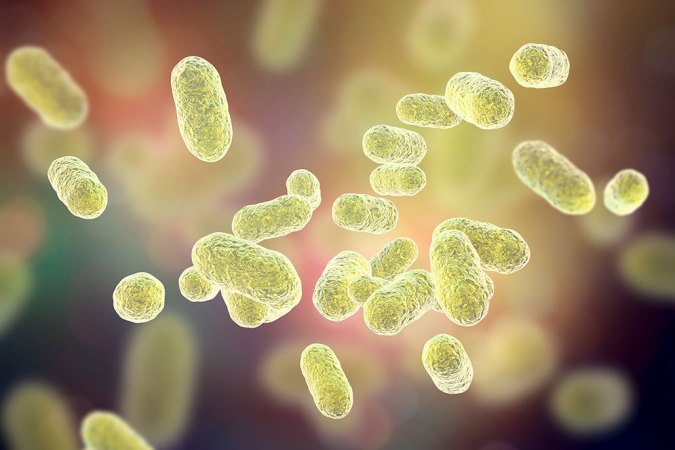
Reina’s group combined its material with bacteria in lab experiments and found that it could kill germs when bathed in infrared light. Those wavelengths are present in sunlight and some room lighting. They also tested the doped acid on a chemical that mimics living tissue, such as skin. It triggered no harmful reactions.
Those tests suggest that the new material is safe for the human body, including the mouth. That’s critical for how Reina and his colleagues intend to use it.
Their team is now working with dentists and researchers to develop a “splint.” It’s a type of tray filled with a liquid film that can fit over the teeth. Within a few minutes, the tray could coat teeth with the new graphene-based material. Then, light shined into the mouth would kick on its antimicrobial activity.
The researchers have been testing the material against common infectious agents in gum tissue. One day, after having a dental procedure, someone might wear the splint and expose it to light. “It’s something the patient can do at home,” too, Reina says, to kill harmful germs in their mouth.
He sees the new coating as a potent new tool in the ongoing fight against microbial “superbugs.” Many harmful germs don’t just spread easily. Some also have developed resistance to drugs, such as antibiotics. These infections are now very hard to knock out. In fact, resistant infections kill more than 1.25 million people each year, according to the World Health Organization.
Materials like graphene, which deliver germs a one-two punch, could offer new ways to quash such resistant germs.
Do you have a science question? We can help!
Submit your question here, and we might answer it an upcoming issue of Science News Explores
📚 NCsolve - Your Global Education Partner 🌍
Empowering Students with AI-Driven Learning Solutions
Welcome to NCsolve — your trusted educational platform designed to support students worldwide. Whether you're preparing for Class 10, Class 11, or Class 12, NCsolve offers a wide range of learning resources powered by AI Education.
Our platform is committed to providing detailed solutions, effective study techniques, and reliable content to help you achieve academic success. With our AI-driven tools, you can now access personalized study guides, practice tests, and interactive learning experiences from anywhere in the world.
🔎 Why Choose NCsolve?
At NCsolve, we believe in smart learning. Our platform offers:
- ✅ AI-powered solutions for faster and accurate learning.
- ✅ Step-by-step NCERT Solutions for all subjects.
- ✅ Access to Sample Papers and Previous Year Questions.
- ✅ Detailed explanations to strengthen your concepts.
- ✅ Regular updates on exams, syllabus changes, and study tips.
- ✅ Support for students worldwide with multi-language content.
🌐 Explore Our Websites:
🔹 ncsolve.blogspot.com
🔹 ncsolve-global.blogspot.com
🔹 edu-ai.blogspot.com
📲 Connect With Us:
👍 Facebook: NCsolve
📧 Email: ncsolve@yopmail.com

😇 WHAT'S YOUR DOUBT DEAR ☕️
🌎 YOU'RE BEST 🏆