
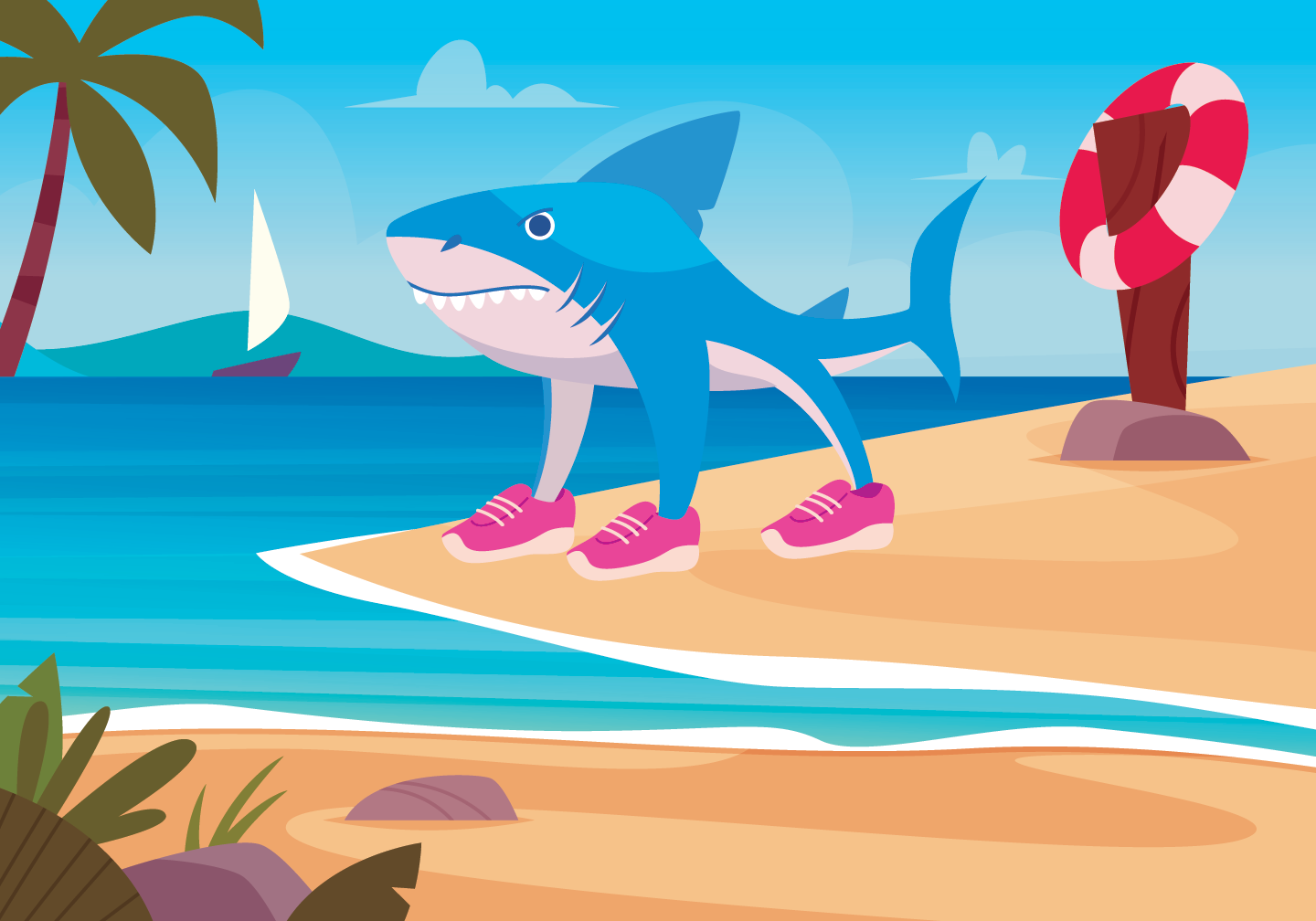
Who’s your favorite brain rot? Maybe it’s Tralalero Tralala, a shark wearing three sneakers. Or Tung Tung Tung Sahur, a log holding a baseball bat. These ridiculous AI-generated characters show up in memes, videos, Roblox games and more.
Brain rot also refers to any mindless or compulsive online habit, such as zombie scrolling. But could any of this stuff actually rot your brain?
Yes — but it’s complicated.
Brain rot is a lot like candy, says Kris Perry. She’s the executive director of Children and Screens. This New York-based group works to make the public aware of how digital media can affect kids. Like candy, a little brain rot now and again won’t hurt you. But the more you partake, the bigger a problem it can become, argue Perry and other experts.
Some of those experts have recently sounded an alarm about what can happen when young people consume too much brain rot. Says Perry: “This stuff can really impair your memory, your ability to plan, your ability to focus, your ability to pay attention, your ability to make decisions.”
Others point out that, although some data along these lines are emerging, the effects are not that strong.
Talk about brain rot has been trending recently. The idea that digital media might make us dumber? That’s not new at all.
Back in 2010, Eric Schmidt was the chief executive officer at Google. “I worry that the level of interrupt, the sort of overwhelming rapidity of information … is affecting deeper thinking,” he said.
Everything you do helps build up new brain pathways and trim back others. The fancy science term for this is neuroplasticity. A plastic brain allows you to learn and grow from experiences. It also allows those experiences to mold and change you. This is especially true for adolescents, whose brains are undergoing rapid change.
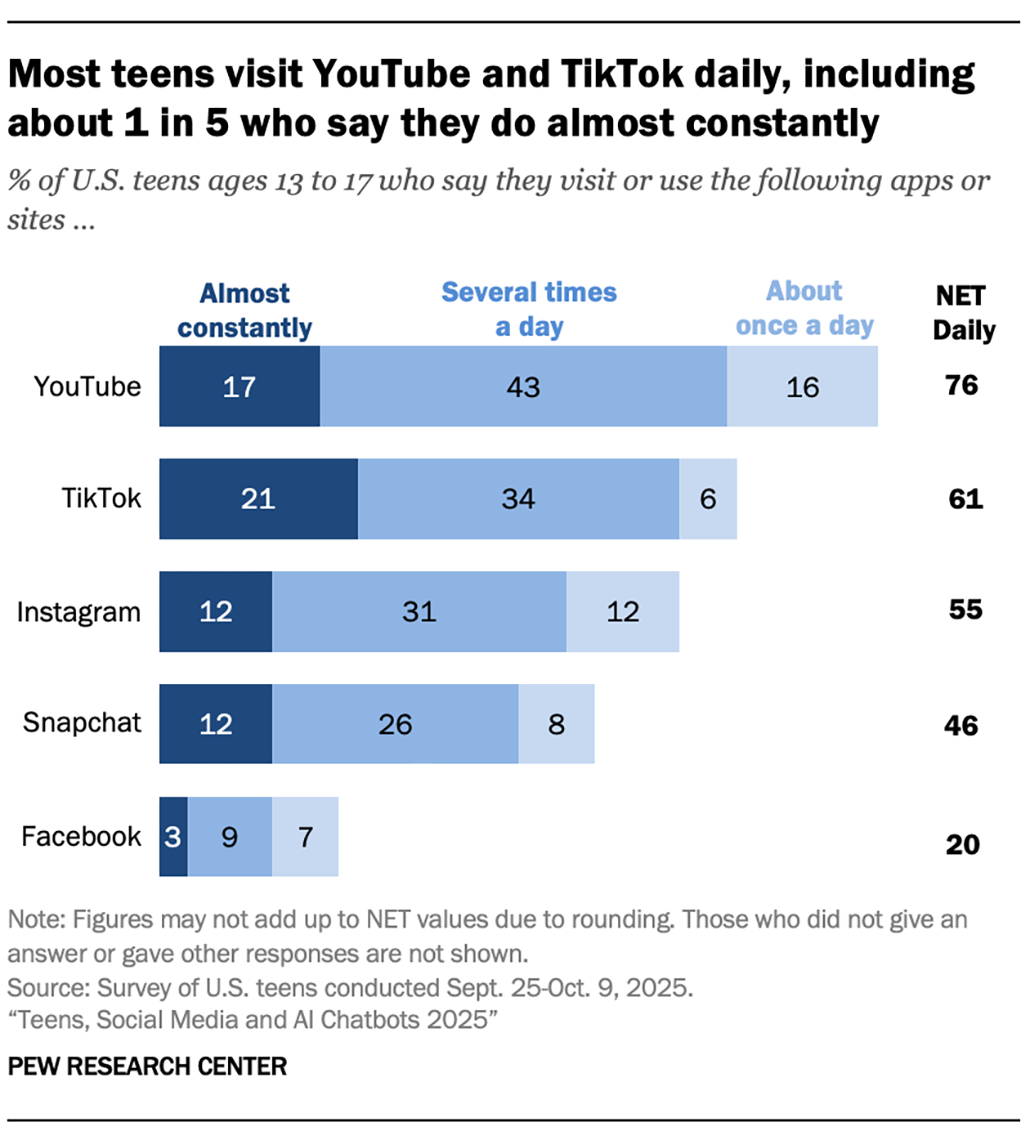
Many of our brain-molding experiences now take place on screens. In 2021, when the COVID-19 pandemic was still keeping many people home, kids ages 8 to 12 were spending an average of 5.5 hours on screens each day. That number jumped to 8.5 hours for 13- to 18-year-olds. And in a 2025 Pew Research Center survey, four in 10 U.S. teens said they are online “almost constantly.”
Of course, you can do healthy, creative or practical things on your favorite device. You can connect with faraway family and friends, make art or play educational games. These things can help develop a healthy brain. But it’s often far too easy to get distracted and sucked into brain rot.
Like a huge bowl of candy sitting right in front of you, the apps on your phone or tablet offer up endless tempting distractions. And you don’t even have to be on your phone for it to distract you. One study found that just having your phone in the same room as you — available but not in use — can make it more difficult to think and process information.
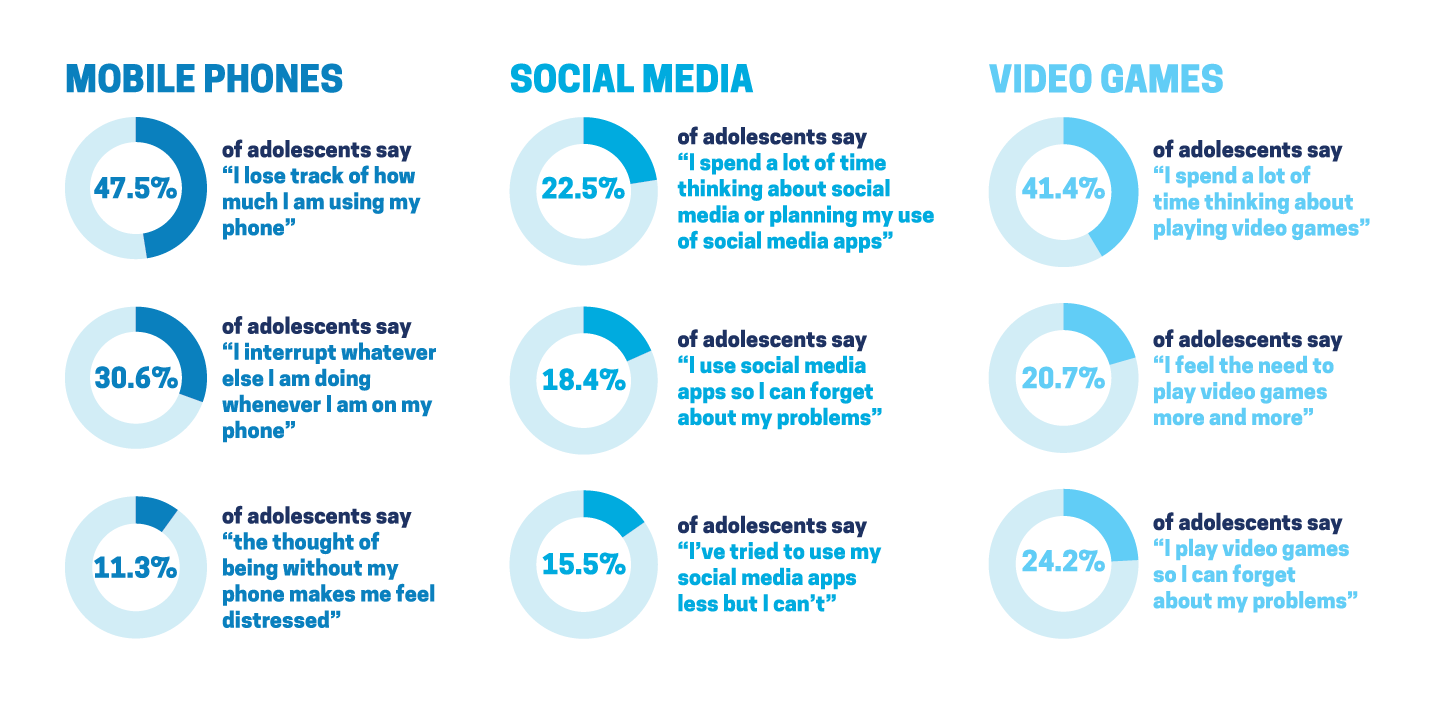
Another study tracked what apps young people opened and used while in school. And — spoiler alert — educational tools were at the very bottom of the list. Instead, “the top apps were social media, YouTube videos and video gaming,” says Jason Nagata. He led the research. He’s also a doctor who specializes in teen health and digital media at the University of California, San Francisco.
Addicted to screens?
If you’ve ever wanted to put down your device but felt like you couldn’t, you’re not alone.
Social-media apps, chatbots and most video games are designed to keep you engaged. This can lead to symptoms similar to those seen with addiction to drugs or alcohol, says Nagata. In one 2021 study of almost 500 16- to 19-year old students in India, more than one in every three showed signs of addiction to their phones. These included feeling pain in their wrists while using their phone or constantly checking for updates on social media.
Addictive — or at least habit-forming — smartphone use also interferes with sleeping, studying and friendships.

Emma Lembke knows those signs well. She first joined Instagram at age 12. Soon, she found herself “scrolling mindlessly for hours, addicted to gaining a certain number of likes, a certain number of comments.” She often wanted to stop — but couldn’t. It left her feeling guilty and ashamed.
That compulsion wasn’t really her fault. Choosing to put down or ignore a bowl of candy or a tempting device requires using a brain area called the prefrontal cortex. Among other things, it deals with “self-management and impulse control,” explains Perry. But this brain area doesn’t develop fully until relatively late in adolescence. And adolescence may stretch all the way to our early 30s, new data suggest.
So it’s harder for young kids or teens to control their screen use than it is for adults, says Torkel Klingberg. This neuroscientist at the Karolinska Institute in Stockholm, Sweden, studies how kids’ brains develop.
In addition, teen brains respond strongly to rewards. Likes and comments activate the same reward pathways in the brain as chocolate or winning money, research has shown. This sensitivity normally decreases as teens age. But when young people checked social media constantly, one study found, their brains remained highly sensitive to rewards.
Eventually, at age 15, Lembke managed to make a change. She started by deleting the Instagram app from her phone. “I felt really freed,” she says.
Two years later, in 2020, she founded the Log Off Movement. It empowers young people to think critically and make mindful decisions about how they engage with social media and other online content.
Her group is now launching a newsletter called The Feed. Tweens and teens can use it to share stories about their struggles with screen time.
In Lembke’s case, deleting Instagram didn’t undo changes that had already happened in her brain. Her early compulsive social media use left “deep scars,” she says. In college, she struggled with an eating disorder. She thinks it was largely due to images and interactions she experienced on Instagram as a young girl. She says they had changed “the relationship I had with myself and my body.”
Cause and effect
Personal stories and activism help bring attention to an issue like problematic social media or phone use. But it takes scientific research to understand how screens might alter a teen brain. Researchers have to tease apart the effects of screens and normal changes during development.
One very important research project is known as the ABCD study. Those letters are short for Adolescent Brain Cognitive Development. It’s been collecting data from more than 11,500 U.S. kids since 2017. At its start, they were all 9 or 10 years old. Each year since then, these young people and their parents answer surveys about their health and screen use. And every other year, the participants go through medical tests. These include a brain scan.
In 2025, Nagata and his team reviewed what scientists learned from the ABCD data. They linked higher amounts of screen time to a higher risk of numerous health issues. These included depression, attention deficit/hyperactivity disorder (ADHD) and eating disorders.
It’s one thing to link health problems and screen time. It’s far tougher to show one causes the other. Here, following the same teens over a course of several years helps. Researchers can study whether more screen time actually leads to health problems at some later date.
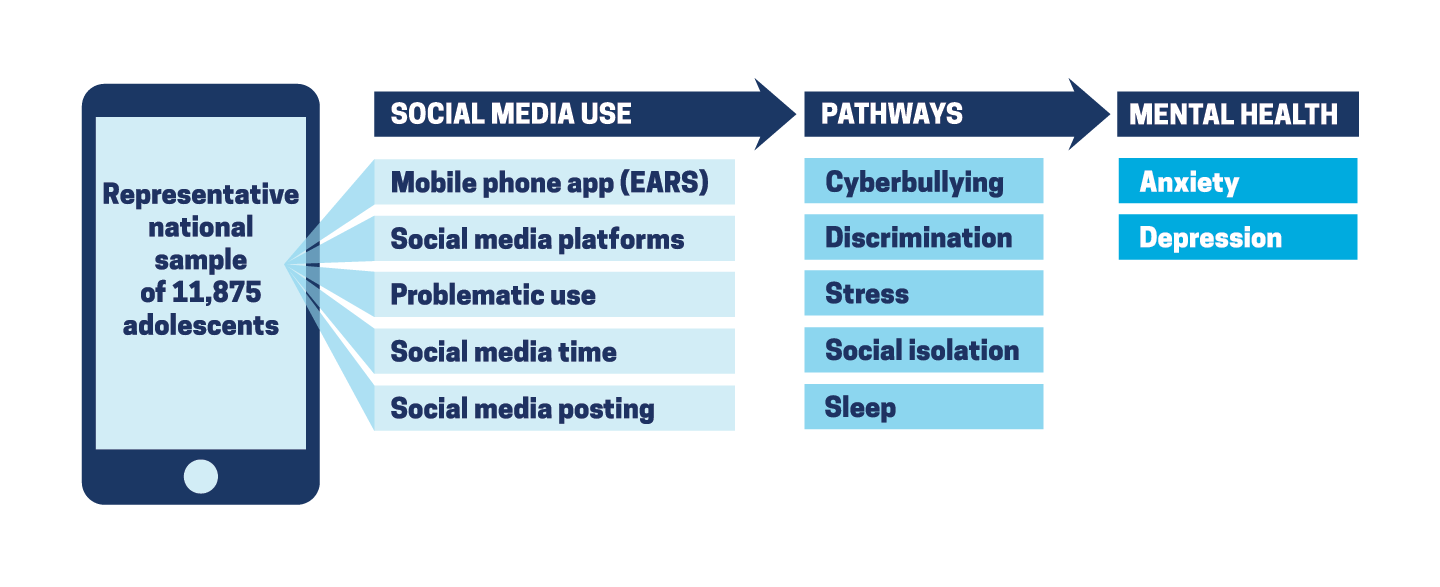
Nagata’s team used a subset of the ABCD data to see what happened to kids and teens with problematic patterns of phone and social-media use. One year later, these young people were more likely than their peers to experience depression, attention issues, sleep problems and several other health issues. The team shared its findings February 11 in the American Journal of Preventive Medicine.
Klingberg, at the Karolinska Institute, was part of a team that analyzed four years’ worth of ABCD data. Rising social-media use led to a greater likelihood of attention problems over the course of four years, they found. But the opposite was not true. Attention problems did not lead to more social-media use. They reported these findings January 16 in Pediatrics Open Science.
Klingberg’s group also looked at brain scans collected by the ABCD study. High social-media use — around two hours per day or more — slightly stunted the development of one part of the brain, these showed. It was a very small effect, Klingberg notes. But “the trend was towards increasing changes.” So over the next few years, he expects to see an even stronger effect.
That brain region, the cerebellum, has many different roles. It’s important for body control, language and emotions. But it also “has been linked to attention before,” Klingberg points out. So this brain change could help explain attention issues experienced by teens who increase their social-media use.
Importantly, social media was the only screen use showing a negative impact on brain development in this study. Video games can actually help make kids smarter, Klingberg’s previous research has shown. He cautions, however, that gaming might still pose some risks. One example, he says, might be “if you get so hooked that you can’t control the amount of gaming.”
Your brain on ChatGPT
New types of brain rot pop up and spread quickly. Chatbots such as ChatGPT — which use AI to answer questions — now have some experts concerned.
Using AI to do work for you could be a new form of brain rot. It might also prove especially harmful to adolescents, whose brains are undergoing a natural rewiring.
Last year, researchers put this theory to the test in people 18 to 39 years old. They measured brainwaves as these people wrote essays during four sessions over a four-month period. One group couldn’t use any tools for help. A second group had access to Google. The last group used ChatGPT.
Those using ChatGPT lagged behind the others in their level of brain activity and their ability to remember the essays they’d written. Researchers shared these new findings last June on arXiv.org.
Your brain “doesn’t really struggle when you use [chatbots],” explained study author Nataliya Kosmyna in a podcast. She’s a neuroscientist and expert in human-computer interactions at the Massachusetts Institute of Technology in Cambridge.
A second team compared brain activity in adults and young children as both used ChatGPT. Among the kids, control systems in their brains turned on even less than they did in adults, the team reported last November on arXiv.org. This suggests chatbots could pose a danger to kids’ brain development, concludes Tzipi Horowitz-Kraus. This neuroscientist at the Johns Hopkins School of Medicine in Baltimore, Md., was an author of that study.
Because neither group’s findings have yet gone through peer review, they’re considered preliminary. However, a peer-reviewed study from October 2025 compared how much people learn when using either Google or a chatbot to research a topic. Those using Google were able to explain their topic more deeply and thoroughly.
When you get an easy answer from AI, worries Horowitz-Kraus, “you’re not developing the basic skills that you need in order to perform as an adult in this world.” She points out that you go to the gym to stretch your muscles. Your brain, she says, also needs to work and stretch. Brain work involves “asking questions,” she notes. It should also include “looking at the world, running outside after birds and cats and dogs and playing with your friends.”
Adapt and fight back
If everyone grows up gobbling brain rot, any problems it causes with thinking or attention or mental health could become an epidemic, says Klingberg.
“If we have constant distractions in the entire population year after year, we will have long-term effects,” he worries. “We will have cognitive decline.”
That sounds scary. But don’t expect a brain-rotted zombie apocalypse any time soon.
“Children adapt to new media quickly,” says Susanne Baumgartner. This media psychologist studies how people use technology at the University of Amsterdam in the Netherlands. Teens who use their phones a lot while also doing other things will say they can’t focus, her research finds. However, when they are not trying to multitask, they can still focus as well as their peers. This suggests to her that screens impact kids’ motivation to pay attention, not their ability to do so.
We will adapt and maintain our intelligence and ability to focus, she believes. So, she concludes, brain rot “does not completely ruin your brain.”
Still, Baumgartner notes, brain rot can easily steal two hours of your day. And that’s a big problem if that screen time is replacing things such as homework, sports, sleep or social time. In many cases, it’s not brain rot itself that’s hurting kids, but the healthy activities they’re missing out on while they zombie scroll.
Lembke agrees. The Log Off Movement is not about completely removing yourself from the online world, she says. That’s just not practical. Rather, she says, it’s about building a relationship with technology “that serves you.” You should be choosing how and why to engage with your screens, she says — “not just be consuming brain rot.”

Nagata agrees. “If you’re using media in a way that’s making you feel better about yourself, so that you’re learning, you’re connecting with people, that’s great,” he says. “If you feel bad about the content that you’ve been seeing, then that is maybe a signal [to stop].” And if you feel like you can’t stop, talk to your doctor or another trusted adult.
In the end, though, it’s not fair to put total responsibility for managing screen time entirely on young people — especially since their brains haven’t fully developed the wiring to do this. Perry and Lembke argue that tech companies shouldn’t be allowed to sell products that harm kids’ health.
Put simply, Perry says: Addictive social media, videos or chatbots that target kids “should be illegal.” Many other adults feel that way as well. It explains a host of more than 1,500 lawsuits now moving through U.S. courts.
This past February, the first of these went to trial in a Los Angeles courtroom. The algorithm that sends out feeds on Instagram and other social media, it argues, is addicting children and teens to an unhealthy use of screens.
A February 11 news story at CNN explained that this first trial will be an important test. It will show whether U.S. courts may agree with claims that social media companies have harmed kids’ mental health.
In the meantime, another group that Lembke co-founded, Design it For Us, is working toward establishing new laws and rules that would make this tech safer for kids and teens.
📚 NCsolve - Your Global Education Partner 🌍
Empowering Students with AI-Driven Learning Solutions
Welcome to NCsolve — your trusted educational platform designed to support students worldwide. Whether you're preparing for Class 10, Class 11, or Class 12, NCsolve offers a wide range of learning resources powered by AI Education.
Our platform is committed to providing detailed solutions, effective study techniques, and reliable content to help you achieve academic success. With our AI-driven tools, you can now access personalized study guides, practice tests, and interactive learning experiences from anywhere in the world.
🔎 Why Choose NCsolve?
At NCsolve, we believe in smart learning. Our platform offers:
- ✅ AI-powered solutions for faster and accurate learning.
- ✅ Step-by-step NCERT Solutions for all subjects.
- ✅ Access to Sample Papers and Previous Year Questions.
- ✅ Detailed explanations to strengthen your concepts.
- ✅ Regular updates on exams, syllabus changes, and study tips.
- ✅ Support for students worldwide with multi-language content.
🌐 Explore Our Websites:
🔹 ncsolve.blogspot.com
🔹 ncsolve-global.blogspot.com
🔹 edu-ai.blogspot.com
📲 Connect With Us:
👍 Facebook: NCsolve
📧 Email: ncsolve@yopmail.com

😇 WHAT'S YOUR DOUBT DEAR ☕️
🌎 YOU'RE BEST 🏆